ArchiSense is an intelligent building monitoring system developed by Roman Vlasov, combining advanced IoT technologies, machine learning, and digital modeling to ensure full transparency of any structure's condition. The system is designed as a universal solution for residential, commercial, industrial, and transportation facilities, scalable from a single building to entire infrastructure complexes.
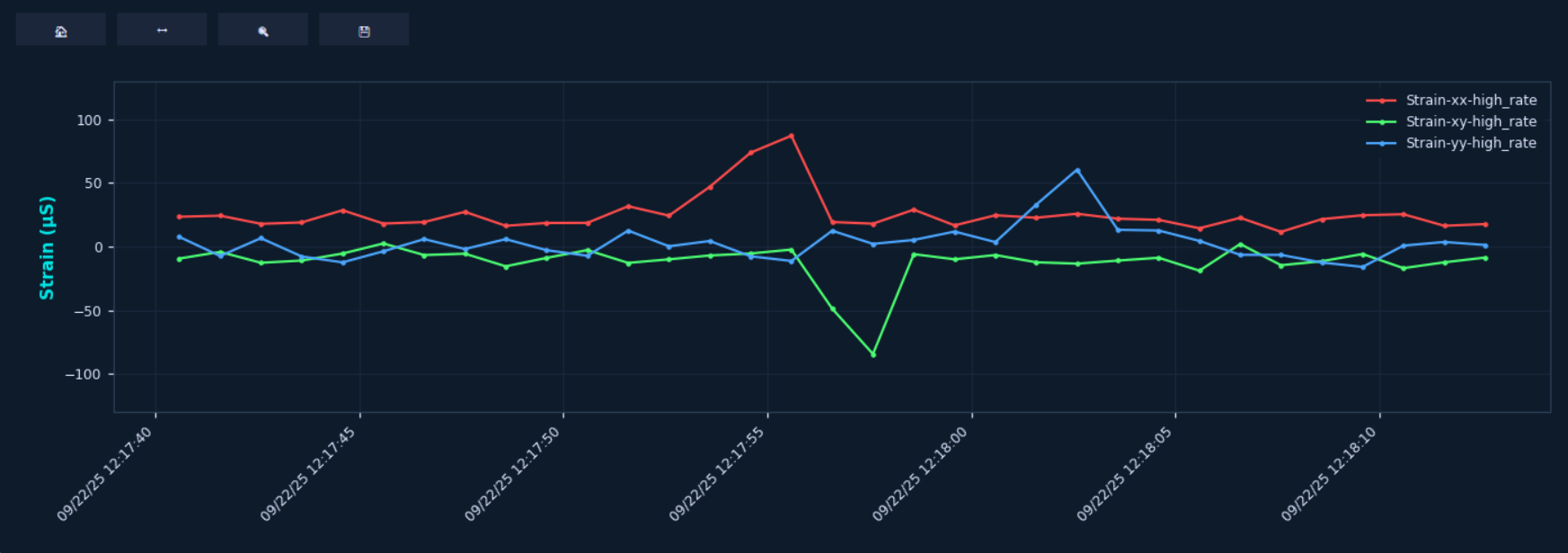
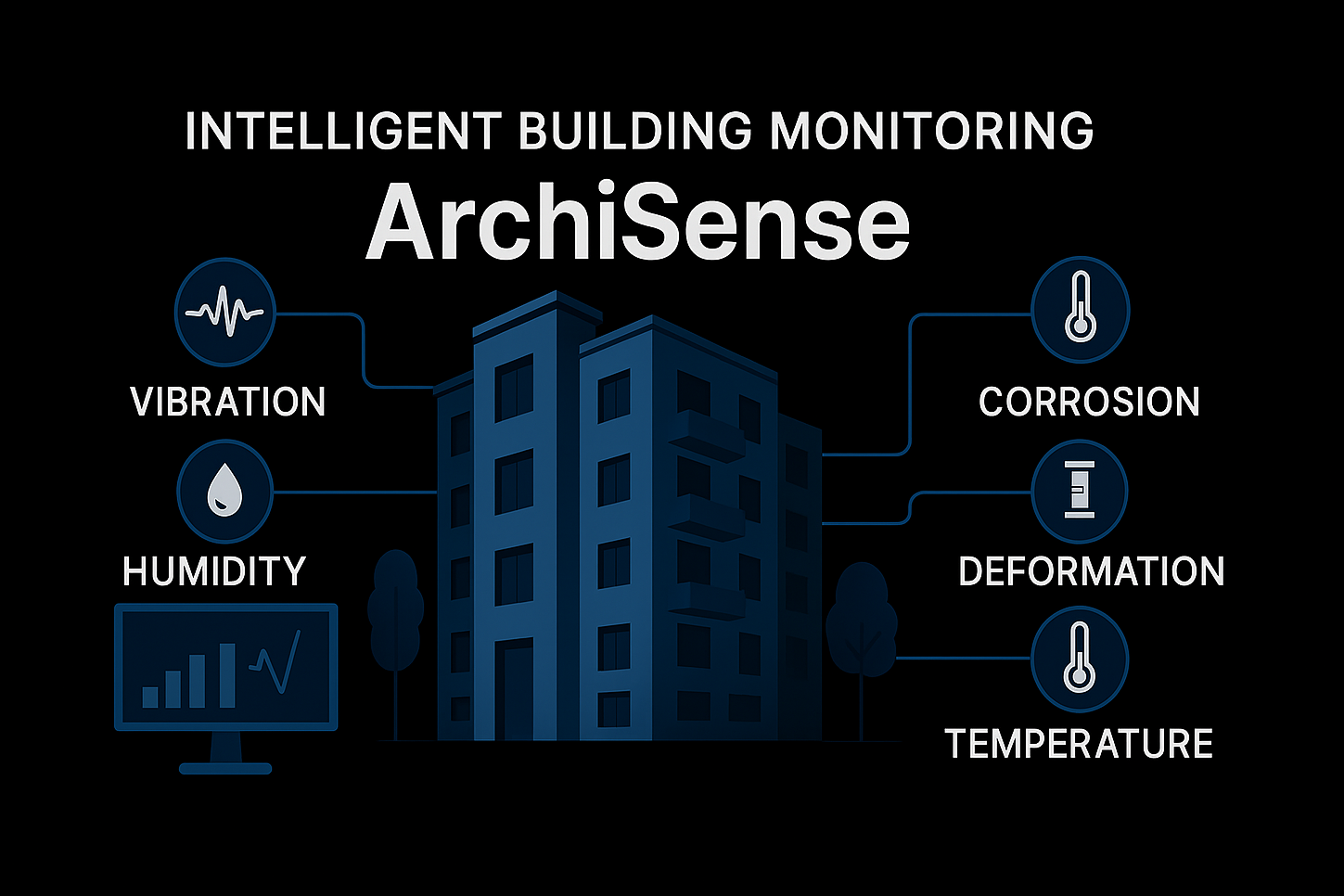
At the core of ArchiSense is a network of high-precision sensors that track deformation, vibration, temperature, humidity, air quality, and gas and dust levels. This data is sent to a central processing hub, where modular data acquisition systems (DAQ) and powerful analytical algorithms perform real-time analysis. A key feature is the support for automatic alerts: the system instantly notifies responsible personnel when anomalies exceed acceptable thresholds.
ArchiSense actively integrates with BIM (Building Information Modeling), allowing not just the collection of numbers but overlaying data onto a 3D model of the building or structure. This enables managers, engineers, and designers to visually monitor critical zones, predict the wear of structural elements, and make decisions based on real data rather than assumptions.
ArchiSense uses custom-engineered sensors developed in-house, ensuring full control over quality, accuracy, and system integration. Designed to meet or exceed international standards (ISO, ASTM), these sensors are tailored to the specific needs of structural monitoring, including deformation, vibration, environmental conditions, and gas detection. The system supports both wired and wireless data transmission protocols, including Ethernet, Wi-Fi, LoRaWAN, and Zigbee, making it flexible for implementation in any environment, from dense urban development to remote industrial sites.
The software part of ArchiSense is built on principles of scalability and reliability. It includes powerful tools for time series analysis, machine learning modules for pattern detection, and API interfaces for integration with corporate systems, cloud services, and mobile applications. The system can automatically generate condition reports, predict maintenance needs, and offer recommendations for optimizing operations.
ArchiSense has been successfully applied to various projects, from high-rise residential complexes in Moscow and the Moscow region to bridges, factory buildings, and transport interchanges. On each project, the system has proven to be a highly effective tool for preventing incidents, reducing operational costs, and extending the lifespan of structures. In one project, ArchiSense helped detect hidden stresses in load-bearing beams before cracks appeared, allowing timely repairs and avoiding costly reconstruction.
Today, ArchiSense continues to develop and adapt to international markets, offering innovative solutions in the field of intelligent building monitoring and maintenance. It is not just a control system, it is a whole ecosystem that changes the approach to property operation and management, oriented towards the future and fully prepared for the challenges of the 21st century.
Why Does the World Need ArchiSense?
Skyscraper Collapse in Bangkok (Thailand, March 2025)
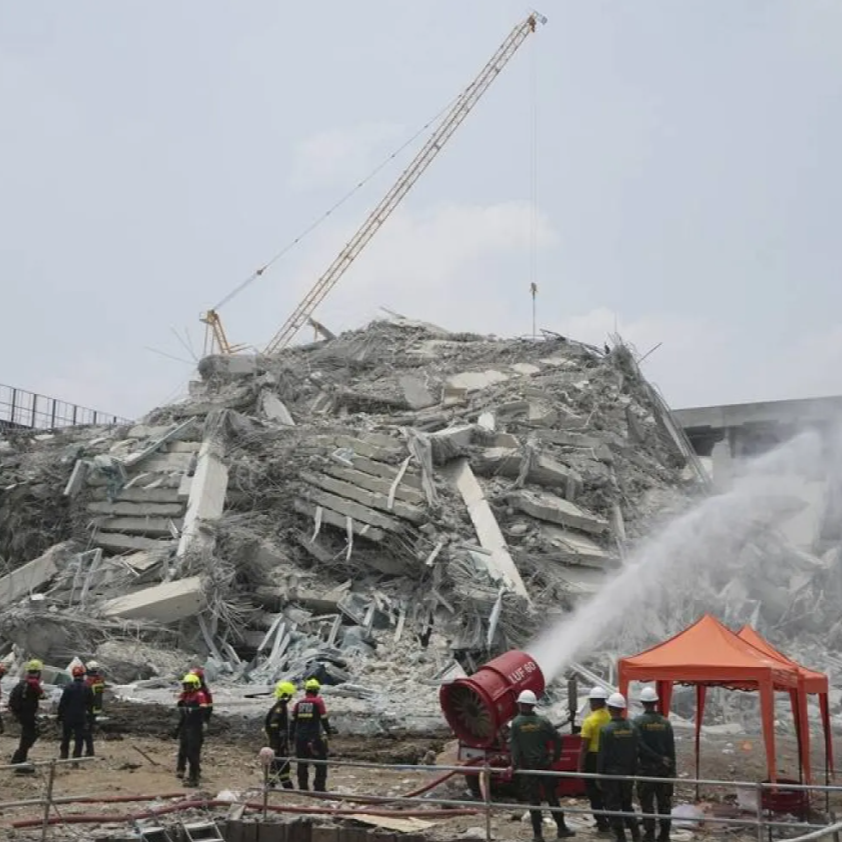
At the end of March 2025, in Bangkok (Thailand), during a powerful 7.7-magnitude earthquake, a 30-story unfinished skyscraper — the new building of the State Audit Office — collapsed. 92 people died, dozens were injured.
The investigation revealed serious structural deficiencies: the building's design did not meet standards, 'design defects' were found in the load-bearing elevator shaft, and the concrete and steel were of poor quality. The building completely collapsed, while neighboring structures in the same earthquake remained standing, indicating critical structural unreliability.
The ArchiSense system could have detected such anomalies in advance. Possible warning tools:
Strain and tilt sensors on key columns and beams, tracking any displacement or deflection beyond permissible limits
Accelerometers and vibration sensors on slabs, recording abnormal oscillations under seismic load
Crack scanning sensors (ultrasonic/infrared) in concrete to detect emerging fractures
ArchiSense algorithms would have analyzed the collected data in real time against the building's design model. When deformations sharply exceeded norms or cracks appeared, the system would have immediately generated an alarm — essentially, fractions of a second before total collapse, the critical structural failure would have been known.
Partial Collapse of Champlain Towers South Condominium, USA (Surfside, Florida, June 2021)
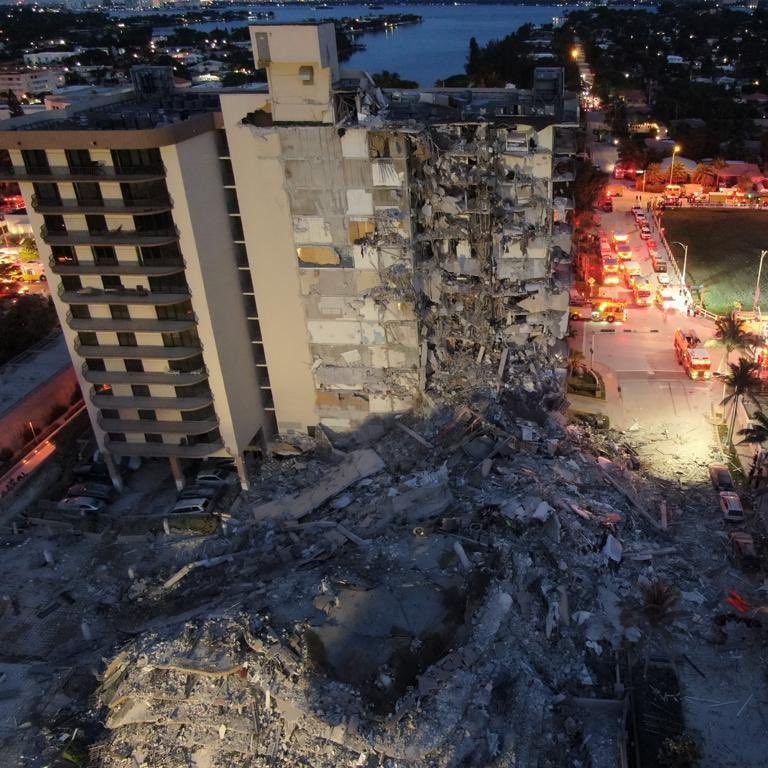
In June 2021, in Surfside (Florida, USA), a partial collapse occurred at the 12-story Champlain Towers South condominium. As a result, 98 people died, and dozens were injured.
The investigation revealed that the cause was a design failure near the pool area: the pool slab concrete and support columns had lower-than-design strength, and over time, additional weight (decorative planters) was added, overloading the elements. Moreover, waterproofing errors allowed water to continually seep into the lower floor, causing rebar corrosion in the supports.
The ArchiSense system could have continuously monitored the condition of such vulnerable zones. Possible solutions:
Humidity and corrosion sensors in the pool and basement areas, detecting water intrusion and the start of rebar degradation
Strain sensors (tensometers) in columns under the pool and in floor beams, tracking excessive deflections or load redistribution
Accelerometers on the pool floor slabs, registering slow slab sagging or changes in vibrational characteristics as defects accumulate
ArchiSense algorithms would have analyzed change trends: for example, increasing humidity and deformation over months. A warning could have been sounded long before the catastrophe — the system would have detected abnormal increases in humidity and stresses in the slabs long before June 2021, allowing for repairs or evacuation.
Building Collapse in Changsha (China, April 2022)
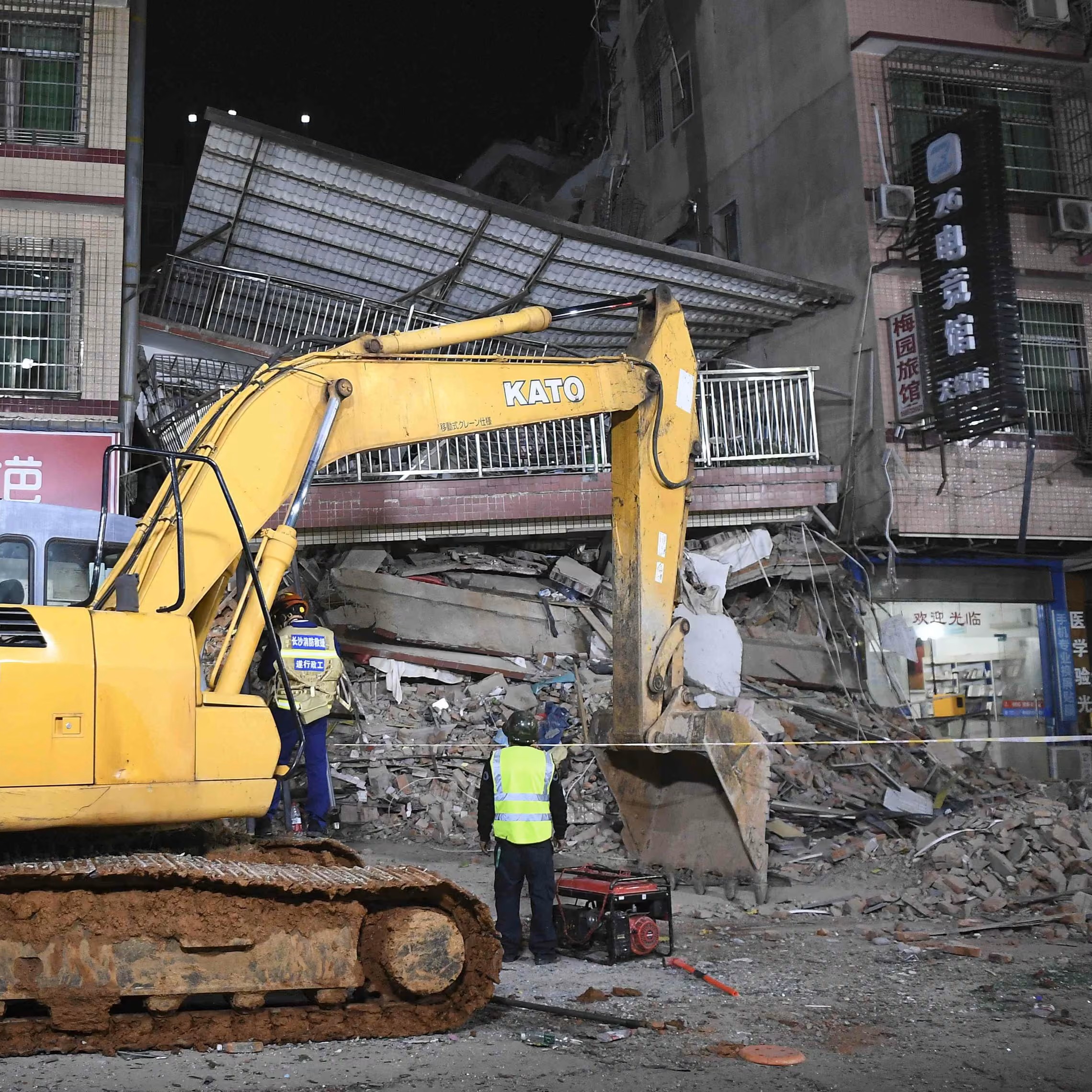
On April 29, 2022, in the Wancheng district of Changsha (Hunan Province, China), an unauthorized residential building collapsed. 54 people died, and 9 were injured.
According to the official report, the cause was 'poor construction quality and illegal addition of floors,' which made the added weight exceed the capacity of the original five-story structure. The building collapsed 'in one piece' — the extra load proved fatal.
The ArchiSense system could have prevented such a tragedy by monitoring the load and structural strength:
Strain gauges in columns and beams would have detected excessive loads from the added floors
Laser/ultrasonic scanners and inclinometers would have monitored gradual tilts or settling of walls and floors
Load sensors on floors would have detected new loads from unauthorized additions
The algorithms would have analyzed data trends: for example, with unauthorized additions, the sensors would have recorded increasing forces and displacements on the lower floors. A timely overload and tilt warning could have been received well before the collapse — potentially weeks or months before the disaster.
Railway Station Canopy Collapse, Novi Sad (Serbia, November 2024)
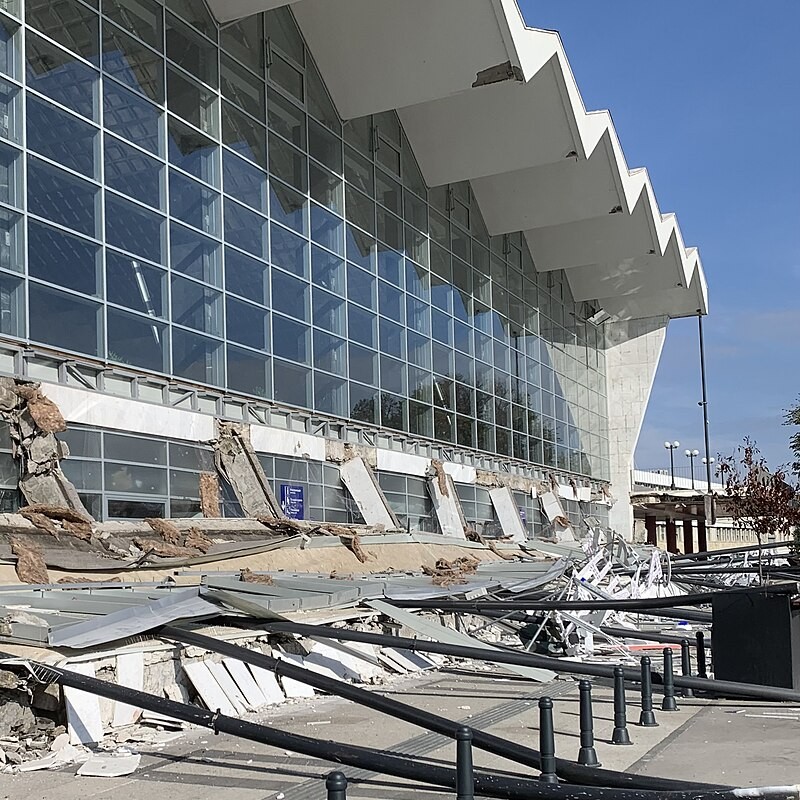
On November 1, 2024, in Novi Sad (Serbia), the suspended concrete roof of the city's main railway station collapsed. 16 people died, and one person was seriously injured.
The structural design of the roof consisted of a massive slab suspended by steel cables and concrete braces; the official cause of the accident is still under investigation.
Nevertheless, the ArchiSense system could have detected signs of weakness in such elements:
Strain and tension sensors on steel cables and concrete braces, detecting increasing stresses or loosening tension
Laser rangefinders and LiDARs for continuous monitoring of the concrete slab's position relative to the supports
LVDT strain sensors at the slab and support joints, capturing the slightest geometric changes
Intelligent algorithms would have detected deviations from normal conditions: for example, gradual slab displacement or tension weakening by mere millimeters over a short time would be flagged as anomalies. Timely warning would have allowed the situation to be assessed and people to be evacuated before the collapse.
Residential Building Collapse, Mumbai (India, June 2022)
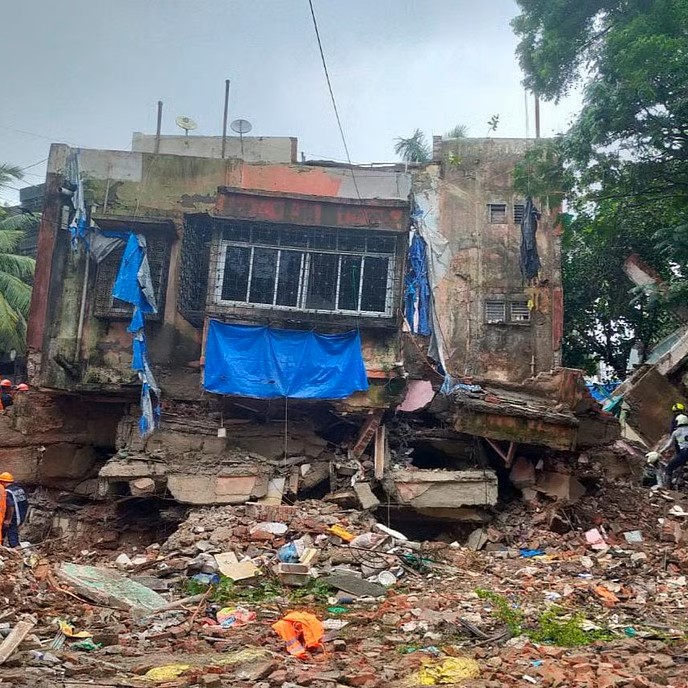
On the night of June 27–28, 2022, in the Indian city of Mumbai, a four-story residential building collapsed. According to preliminary data, at least 17 people died, and many were injured.
Such accidents in Mumbai often occur during the monsoon season due to the dilapidated condition of buildings and poor-quality construction materials.
The ArchiSense system could have continuously monitored the condition of such old buildings:
Humidity and pressure sensors in the walls and foundation, tracking the infiltration of rainwater and the swelling of the structure
Inclinometers and tilt sensors on the roof and walls, detecting tilts under the influence of a water-saturated foundation
Strain and crack sensors in walls and columns, capturing the appearance of new cracks
Algorithms would have tracked the increase in humidity and deformations over time. As soon as the gradual swelling of walls or foundation subsidence was detected (for example, over the course of a day of rains), the system would have issued a warning. This would have provided time to evacuate residents and carry out repairs before the collapse.